
 Posted by
 Every December, my grandmother would pull out this battered cardboard box from her attic, and inside were all these Christmas decorations that had been in our family for decades. There was this particular star ornament, slightly tarnished and missing one of its points, that always went on top of the tree. She never let anyone else place it there. I never understood why she was so protective of that wonky star until she told me the story behind it. Discover the hidden meanings behind Christmas stars, bells, wreaths, and other holiday symbols.
Christmas symbols surround us during the holiday season, but how often do we stop to think about what they actually mean? We see stars on Christmas trees, bells ringing in shopping malls, and wreaths on every door, yet most of us just accept them as festive decorations without really knowing their deeper significance. The truth is, each of these symbols carries centuries of meaning and tradition that connect us to the very heart of the Christmas story.
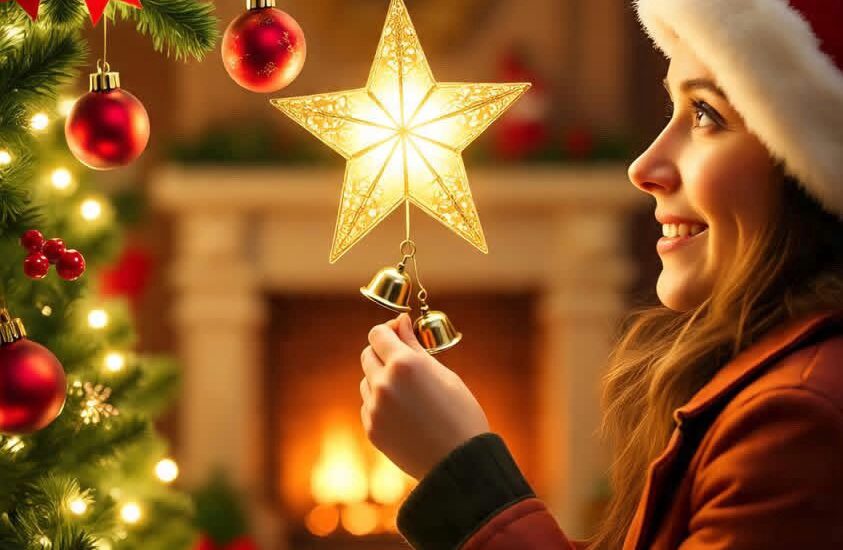
The star is probably the most recognizable Christmas symbol after Santa Claus himself. When we talk about Christmas stars, we are really talking about the Star of Bethlehem, that celestial guide that led the three wise men to find baby Jesus. The Gospel of Matthew describes this star as appearing in the eastern sky, and the Magi followed it across vast distances to bring their gifts of gold, frankincense, and myrrh. My grandmother’s star represented hope and guidance in her life, just as that original star guided travelers through the darkness. She would always say that even when the star looks broken or imperfect, it still shines and points the way forward. I get that now.
Bells have this joyful, celebratory quality that makes them perfect for Christmas festivities. Church bells have been ringing out announcements of important events for centuries, and Christmas bell ringing specifically celebrates the birth of Christ. The sound of bells was believed to drive away evil spirits and bring good fortune, which is why many Christmas traditions involve bell ringing at midnight on Christmas Eve. I remember being in a small village in Europe one Christmas, and when those church bells started ringing at midnight, the sound just washed over everything. It felt ancient and new at the same time.
But bells also serve a more practical purpose in Christmas lore. Legend has it that sleigh bells were attached to Santa’s sleigh so children could hear him coming on Christmas Eve. The jingling of bells became synonymous with excitement and anticipation, that magical feeling of something wonderful about to happen. Even now, when I hear bell sounds during the holiday season, there is this immediate rush of childhood memories and emotions.
Wreaths might seem like simple decorative circles, but they carry rich symbolism in Christmas traditions. The circular shape represents eternal life and the unending love of God, with no beginning and no end. Ancient Romans used wreaths as signs of victory and celebration, but Christians adapted the wreath to represent the crown of thorns worn by Jesus, with the red berries often found in wreaths symbolizing drops of blood. Before you think that sounds too dark for a festive decoration, remember that Christmas is ultimately about sacrifice and redemption as much as it is about celebration and joy.
The evergreen branches used in wreaths hold their own meaning too. While other plants wither and die in winter, evergreens stay green and vibrant, symbolizing the hope and eternal life promised through Christ’s birth. My mother always insisted on making our wreaths from fresh pine branches because she said the scent was part of the symbolism, that fresh, living smell reminding us of resilience and persistence through dark times.
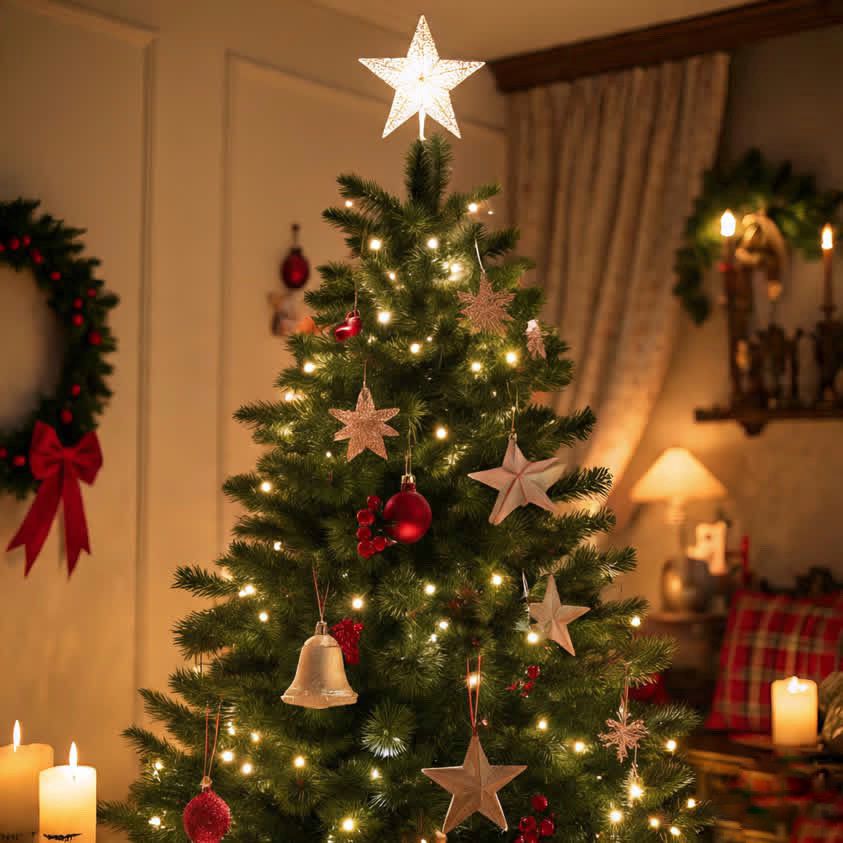
Candles and lights have become inseparable from Christmas celebrations, and their meaning runs deep. Before electricity, people would place candles in their windows during Christmas to light the way for Mary and Joseph seeking shelter. The symbolism of light overcoming darkness perfectly captures the Christian message of Christmas, with Jesus described as the light of the world. When we string lights on our trees and homes, we are participating in this ancient tradition of bringing light into the darkest time of year.
Have you ever wondered why we use so much red and green during Christmas? Red represents the blood of Christ and the love of God, while green symbolizes eternal life and rebirth. These colors show up in almost every Christmas decoration, from ribbons to ornaments to holiday clothing. White often joins them, representing purity and the snow of winter, creating a color palette that feels both festive and meaningful.
Each Christmas symbol we use connects us to generations of believers and celebrants who came before us. That imperfect star my grandmother cherished was not valuable because it was pristine, but because it carried decades of family memories and represented something much bigger than itself. When we hang our decorations and ring our bells this Christmas season, we are not just making things look pretty. We are participating in traditions that link us to the original Christmas story and to countless people throughout history who have found meaning in these enduring symbols of hope, joy, and eternal life.
Reference
Hughes, D. W. (1979). The Star of Bethlehem. Nature, 278(5706), 99–104.
Corbin, A. (1998). Village bells: Sound and meaning in the 19th-century French countryside (M. Thom, Trans.). Columbia University Press.
Extension UNH. (n.d.). Which greens can I collect for making holiday decorations? University of New Hampshire Cooperative Extension. https://extension.unh.edu/blog/2019/11/which-greens-can-i-collect-making-holiday-decorations